Within 1,000 feet of tidal water, Maryland requires a nitrogen-removing septic system. Here's what that actually means, what it costs, and the state grant that pays for most of it.
Call (443) 258-5440Give us the address and what you're planning — replacement, new build, or a purchase you're weighing — and we'll confirm the Critical Area status and the grant math. Call (443) 258-5440.
BAT stands for Best Available Technology for removing nitrogen — a septic system approved by the Maryland Department of the Environment to treat wastewater to 30 mg/L of nitrogen or less before it reaches the drain field. In Talbot County, BAT systems are required for new and replacement septic systems in the Chesapeake Bay Critical Area, and the Bay Restoration Fund grant exists specifically to pay for them.
Nitrogen is the Chesapeake's core pollution problem, and conventional septic systems leak it — a standard tank-and-drain-field system does almost nothing to remove nitrogen before effluent reaches groundwater. On most of the American map that's an abstraction. In Talbot County, with more than 600 miles of tidal shoreline wrapping the Choptank, Tred Avon, Miles and Wye, groundwater is the river. That's why the Critical Area rule bites harder here than nearly anywhere in Maryland: land within 1,000 feet of tidal water — the Bay Hundred peninsula, Tilghman Island, the Oxford and Bellevue shores, and creek frontage on practically every neck — must install a BAT septic system when a new septic system goes in or an old one gets replaced.
Outside the Critical Area the story changed in 2016: Maryland ended the short-lived statewide BAT mandate for new construction, so inland parcels — Cordova, Wye Mills, the farm ground east of Route 50 — can usually build conventional. The Health Department keeps case-by-case authority, which is why the honest answer to “do I need BAT?” is always parcel-specific — and why we check before quoting.
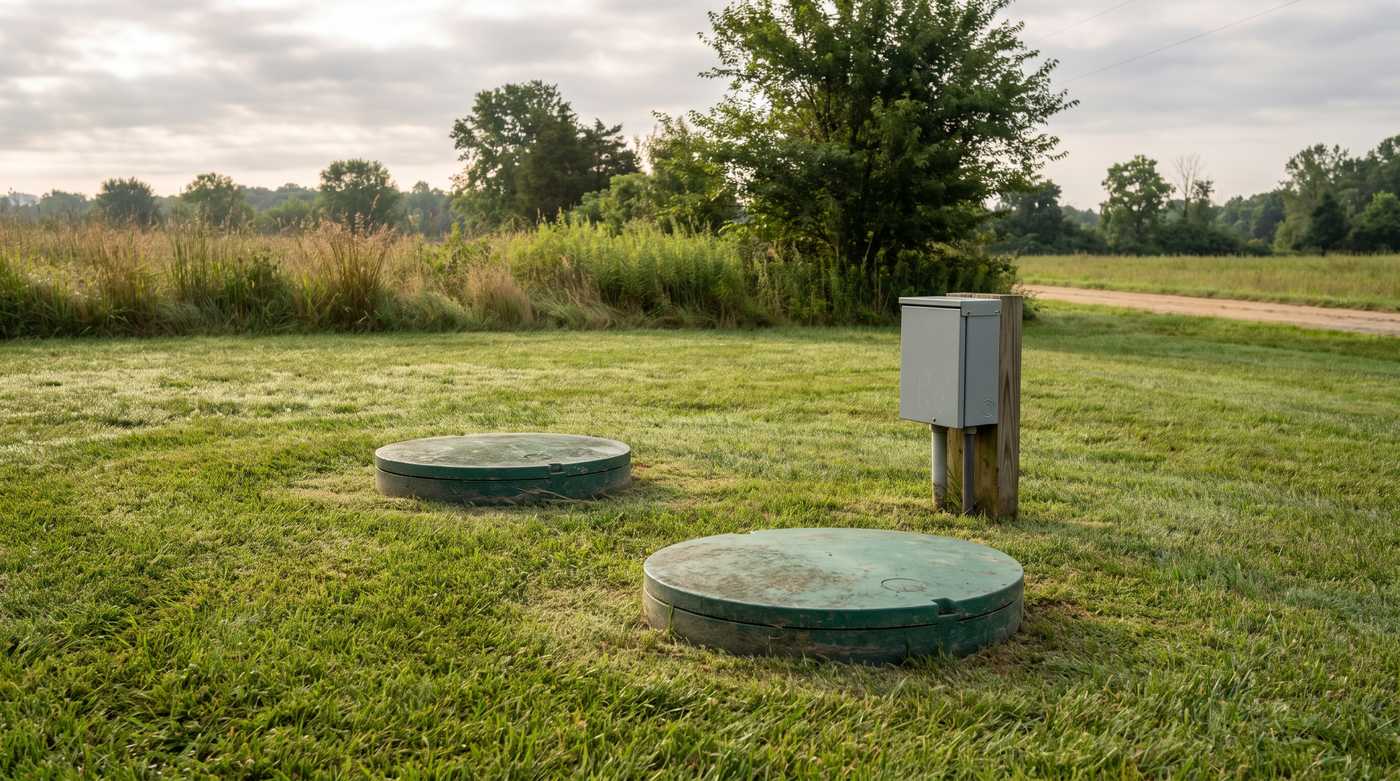
Every MDE-approved BAT septic unit does some version of the same biology: it adds an aerated treatment stage where oxygen-loving bacteria convert waste nitrogen, then a low-oxygen stage where it leaves as harmless nitrogen gas. To make that happen the system carries equipment a conventional septic tank doesn't have — air blowers, diffusers, floats, alarms and an electronic control panel. Approved septic technologies on MDE's Class I list include Fuji Clean, Norweco Singulair, BioMicrobics, Orenco AdvanTex, SeptiTech, Delta ECOPOD, Bionest, AquaKlear, BioClere and Waterloo.
The running costs are real but modest: electricity adds roughly $25–$250 a year depending on the unit, and annual professional septic maintenance runs on the order of $400+ a year after the grant's included two years expire. Talbot County law requires that septic maintenance — Chapter 146 makes BAT inspection and upkeep a legal obligation, not a suggestion, and service visits are logged in Maryland's statewide BAT tracking database.
Installed, a BAT septic system typically runs $12,000–$25,000 depending on the unit, the site and whether the drain field needs work at the same time. Here's the part that changes the decision: the Bay Restoration Fund pays 100% of the BAT unit cost for households under $300,000 of total income, 50% above that, plus the installation and the first two years of operations and maintenance. Failing systems get first priority. For many Talbot County homeowners the out-of-pocket on a required BAT septic replacement ends up lower than a conventional replacement would have been — the grant exists precisely so the 1,000-foot rule doesn't bankrupt the shoreline.
Two cautions we repeat on every page because they cost real people real money: the grant must be awarded before installation starts, and selling the property before the install is complete rescinds it. Sequence matters. Call first.
Critical Area or not, grant-eligible or not, $25,000 or a fraction of it — one call settles what your property actually requires.
(443) 258-5440They do their job well: an MDE-approved BAT system cuts the nitrogen leaving your septic system to 30 mg/L or less — roughly half of what a conventional system discharges — which is the whole point on a county wrapped in tidal water. The honest trade-offs are moving parts and upkeep: blowers, floats and control panels that a conventional tank doesn't have, an electric draw of roughly $25–$250 a year, and scheduled maintenance.
Usually not. Maryland's 2016 reform removed the statewide BAT requirement outside the Critical Area, so inland Talbot County parcels can generally install conventional systems. The Health Department can still require nitrogen removal case-by-case to protect public health, so the final word on any parcel comes with the permit — we confirm it before quoting.
MDE maintains the approved Class I list — it includes Fuji Clean, Norweco (Singulair), BioMicrobics, Orenco AdvanTex, SeptiTech, Delta ECOPOD, Bionest, AquaKlear, BioClere and Waterloo, among others. The septic installer must be certified by both MDE and the manufacturer of the specific unit.
BAT septic systems carry alarms for high water and component faults. An alarm is not a sewage emergency in the first hour — cut water use and make the call. It usually means a float, blower or pump needs attention, which is exactly what the required maintenance visits exist to catch early.
A certified O&M provider — and in Talbot County that isn't optional. County law (Chapter 146) requires BAT systems to be inspected, operated and maintained, and Maryland logs BAT service in its statewide tracking database. Grant-funded installs include the first two years of O&M; after that it's the owner's job. See BAT maintenance.