On the Eastern Shore the ground gets a vote before the architect does. Wet-season soil evaluations, coordinated and interpreted for buyers, builders and owners.
Call (443) 258-5440Buying, building or subdividing — tell us the parcel and the plan, and we'll line up the consultant's report and the county application inside the right window. Call (443) 258-5440.
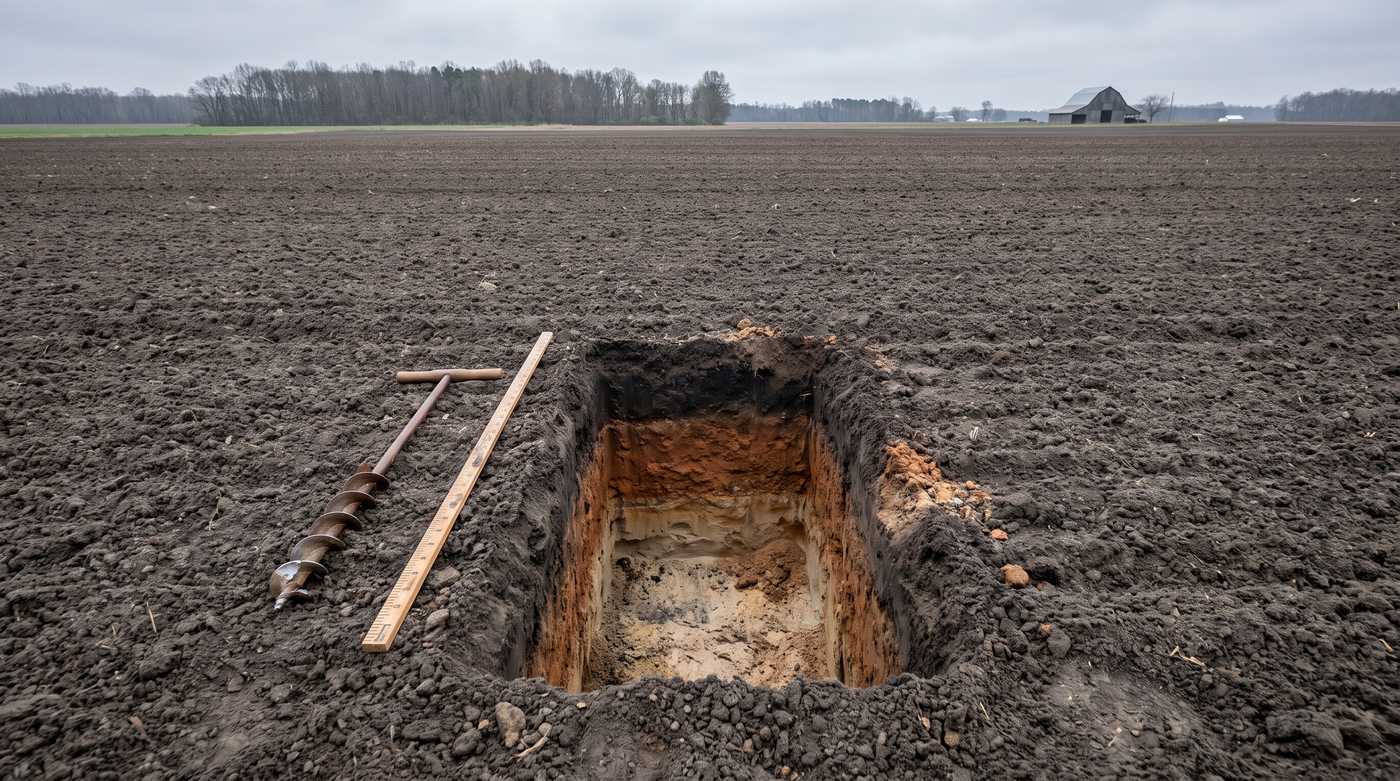
A perc (percolation) test — formally a soil/site evaluation — is the Talbot County Health Department's examination of whether a parcel's soils can treat septic effluent. The county conducts them during its annual Wet Season Testing period, when groundwater is highest, and no septic system can be permitted without one. Call (443) 258-5440 to get a parcel scheduled.
The county monitors observation wells across the Shore and opens its evaluation window when groundwater peaks — usually late winter into spring, with the length of the window shifting on each year's rainfall. The logic is unforgiving in the right way: a drain field is only as good as the driest soil beneath it in the wettest month. A parcel that percs beautifully in September can be standing in groundwater in March, and a system approved against the March number is a system that works for decades.
For anyone planning a build, the window has a planning consequence: the evaluation is an annual event, not an on-demand service. Applications — with the soil consultant's report and the deed — go in against the county's yearly deadline. Start the conversation in summer and you're comfortable; start in the middle of the window and you're gambling on the calendar.
The gap between a parcel with an approved sewage disposal area and one without is the most expensive line item nobody puts in the listing. Waterfront and neck parcels carry the extra layer of the Critical Area BAT requirement, and low ground can force alternative designs that change the budget by five figures. The move that protects you costs almost nothing: make the purchase contingent on the soil evaluation, or buy at a price that assumes the worst answer. We'll tell you which situation you're in before you're in it.
The wet-season calendar doesn't negotiate. Call now and the application, consultant and deadline are handled before they become the problem.
(443) 258-5440During the county's Wet Season Testing period — the stretch of late winter and spring when monitored observation wells show groundwater at its highest. The window's exact dates shift with each year's rainfall, and the Office of Environmental Health sets the application deadline annually. Miss the window and you're typically waiting for next year's — which is why the call happens now, whatever month it is.
In Talbot County: a completed Soil Evaluation Application, a written report from a soil consultant delineating a proposed Sewage Disposal Area on the parcel, a copy of the property deed showing when the parcel was created, and the fees. The evaluation itself is conducted under the Office of Environmental Health.
Not at the price of land that has. An unimproved parcel with no approved sewage disposal area might support a conventional system, might need an expensive alternative design, or might not be buildable at all — and on the Shore's high water table, you can't eyeball it. Make the contract contingent on the evaluation, or price the risk in.
A failed conventional evaluation isn't always the end: alternative designs, a different disposal area elsewhere on the parcel, or a BAT unit can make marginal ground work. What the evaluation really buys you is the truth about the parcel before the framing lumber shows up.
Because a drain field needs unsaturated soil beneath it to treat effluent, and on the low necks of Talbot County the water table can sit close to the surface for months. Testing at the wet season's peak is the county's way of making sure a system approved in spring still works in spring ten years from now.